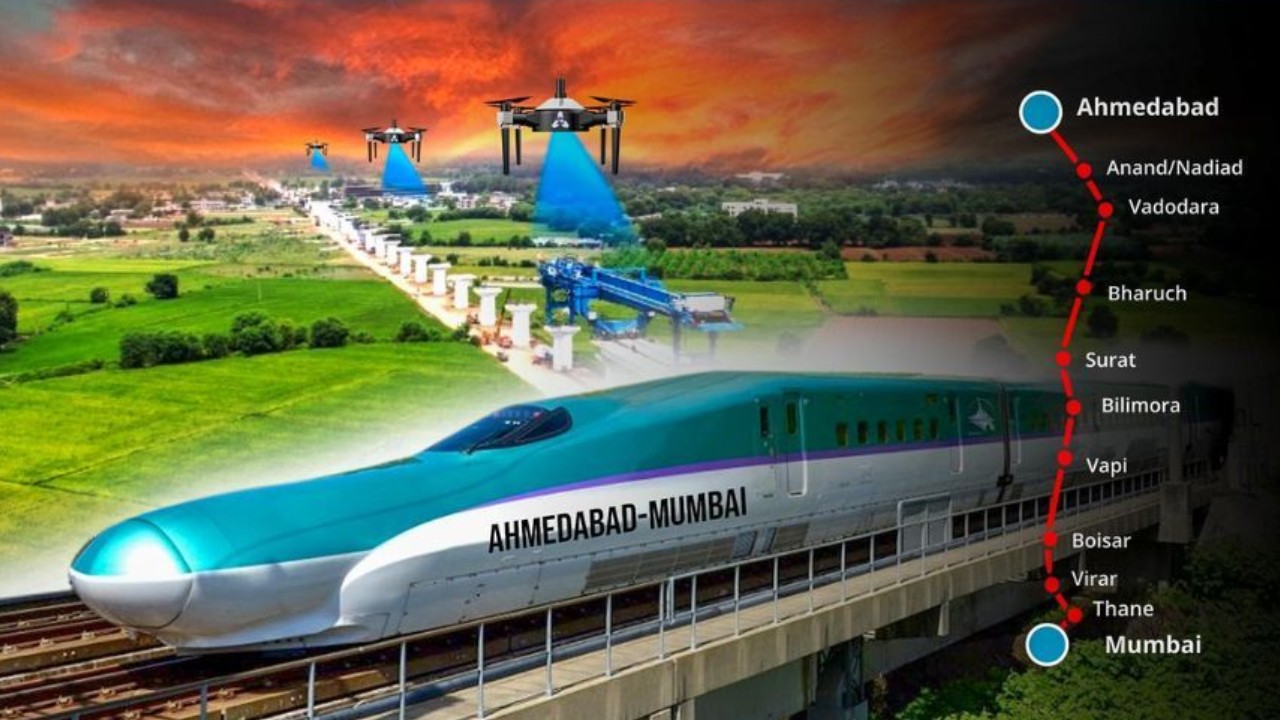
India Bullet Train Drone View: India’s first bullet train project is no longer just a vision on paper. The latest drone view videos released by the National High Speed Rail Corporation Limited (NHSRCL) reveal rapid construction progress on the Mumbai–Ahmedabad High Speed Rail (MAHSR) corridor. From elevated viaducts cutting across farmland to massive river bridges and modern station structures, the visuals offer a clear look at how India is preparing for true high-speed rail.
The drone footage provides a near real-time experience of what it would feel like to travel at 320–350 km/h, nearly 33 to 40 feet above the ground. This project is set to transform intercity travel in western India and redefine infrastructure standards nationwide.
Why Is the Bullet Train Built 33 Feet Above the Ground?
One of the most noticeable aspects of the drone visuals is the elevated alignment of the bullet train track. The corridor is constructed at an average height of 10 to 12 meters, which serves several critical purposes.
Safety at Ultra-High Speed
At speeds exceeding 300 km/h, even a minor obstruction can be dangerous. An elevated track eliminates risks from animals, pedestrians, vehicles, and unauthorized crossings, which are common challenges for ground-level rail lines in India.
Reduced Land Acquisition Impact
Elevated construction allows agricultural activity, roads, and local movement to continue underneath the track. This significantly reduces land acquisition challenges and minimizes displacement, making the project socially and economically more sustainable.
Flood and Weather Protection
Gujarat and Maharashtra experience heavy monsoon rainfall in several regions. Elevated viaducts protect the track infrastructure from flooding and waterlogging, ensuring year-round operational reliability.
Drone View Highlights from Valsad to Sabarmati
The drone journey from Valsad to Ahmedabad’s Sabarmati area showcases the scale of engineering involved in the bullet train project. Long stretches of completed viaducts demonstrate that the Gujarat section is progressing at a fast pace.
Major River Bridges on the Route
The bullet train corridor includes crossings over some of western India’s largest rivers, including the Narmada, Tapi, and Mahi. The Narmada river bridge is the longest and most technically complex structure on the route. Recent drone visuals suggest that this bridge is nearing structural completion.
Surat Bullet Train Station Progress
Surat bullet train station stands out prominently in the drone footage. Designed as a multi-modal transport hub, it will integrate metro services, buses, taxis, and urban transit. Once operational, it is expected to become India’s first functional bullet train station.
| Ahmedabad Bullet Train Station | View |
| Surat Bullet Train Station | View |
| Bilimora / Navasari Train Bullet Station | View |
Bilimora and Navsari Viaduct Construction
The Bilimora and Navsari sections show advanced progress, with viaduct construction in several stretches close to completion. These developments indicate that trial operations in this region may begin earlier than other parts of the corridor.
Bullet Train vs Vande Bharat Express
Although both are modern train systems, the bullet train and Vande Bharat serve different purposes. The bullet train is designed for ultra-high-speed travel with an operating speed of 320 km/h and a design speed of 350 km/h, using Japanese Shinkansen technology on a dedicated standard gauge track. Vande Bharat trains, on the other hand, operate at 160–180 km/h on India’s existing broad-gauge network and are developed using indigenous technology.
Project Timeline and Expected Launch
According to official updates and statements from the Ministry of Railways, the first trial runs of the bullet train are expected to begin between Surat and Bilimora by 2026. Gradual commercial operations will follow, with the full Mumbai–Ahmedabad corridor expected to be completed by 2028 or 2029, subject to testing and safety approvals.
Investment and Economic Impact
Infrastructure experts believe that the bullet train project will have a significant economic impact. Areas around stations such as Surat, Valsad, Vapi, and Sabarmati are expected to see strong growth in real estate demand over the next few years. Companies involved in construction, cement, steel, and engineering services are also likely to benefit from long-term project execution.
Japan Collaboration and Safety Technology
The Mumbai–Ahmedabad High Speed Rail project is being developed with technical and financial assistance from Japan International Cooperation Agency (JICA). The trains will use E5 Series Shinkansen technology, known globally for its exceptional safety standards and zero fatal accident record over more than five decades of operation.